


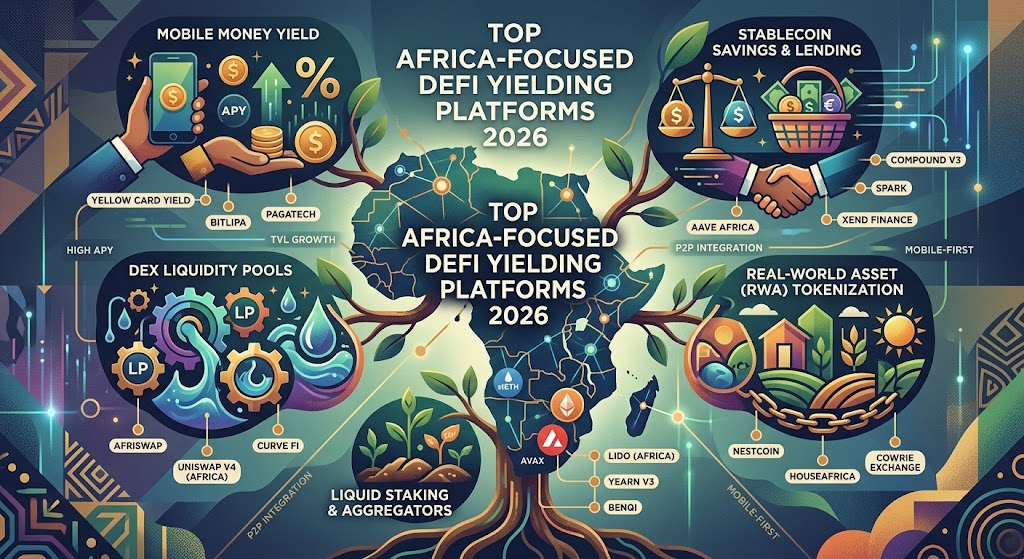
Africa has quietly become one of the most active regions for decentralized finance anywhere on earth.
Sub-Saharan Africa alone pulled in roughly $205 billion in on chain value over the past year, and DeFi adoption in the region now outpaces most of the world according to Chainalysis report.
Currency devaluation, limited access to banking and a young mobile first population have pushed millions toward platforms that let them save, lend and earn yield in dollar pegged assets instead of shrinking local currencies.
Below are ten platforms built for or heavily used across Africa, followed by the steps you need to start yield farming safely.
Ten Platforms Powering Africa’s DeFi Boom
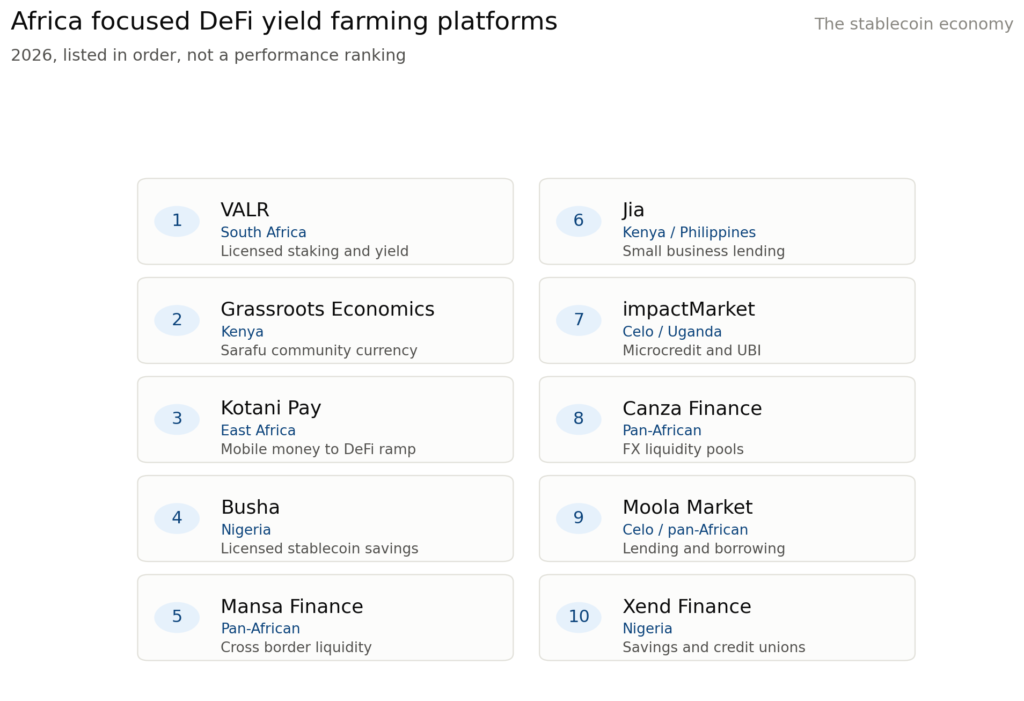
10. Xend Finance
Xend Finance launched out of Enugu, Nigeria, as the first DeFi protocol to build on Binance Smart Chain from the African continent.
It lets individuals and credit unions convert local currency into stablecoins like cNGN and USDT, then earn annual yields that have advertised rates as high as 20 percent through its money market feature.
Backed by Binance Labs and Google Launchpad, it remains one of the most recognized names in African DeFi.
9. Moola Market
Built on Celo, a blockchain designed with mobile first users in mind, Moola Market is a non custodial lending protocol that shares its code with an early version of Aave. Users deposit CELO, cUSD, cEUR or cREAL to earn compound interest, while borrowers pay for over collateralized loans.
Moola powered a well known pilot in Kenya that gave smallholder farmers access to loans through Mercy Corps Ventures and Kotani Pay.
8. Canza Finance
Canza Finance runs Baki, a foreign exchange focused DeFi platform built to solve Africa’s chronic dollar liquidity problem. Businesses can swap between African currencies and stablecoins without the slippage and delay of traditional forex, and liquidity providers earn yield for supplying capital to these currency pools.
Its ecosystem partners include Celo and ConsenSys.
7. impactMarket
impactMarket operates as a decentralized autonomous organization on Celo, focused on financial inclusion rather than pure speculation.
Beyond distributing unconditional basic income to vulnerable communities, it runs microcredit programs that have expanded from Brazil into Uganda, letting depositors fund pools that generate yield while directly supporting borrowers.
6. Jia
Jia began in Kenya and now also operates in the Philippines, offering an on chain lending pool built through Huma Finance on Celo. It targets women led small businesses that traditional banks often overlook, and it lets outside capital providers earn yield by funding the pool that finances those loans.
5. Mansa Finance
Mansa Finance provides stablecoin backed liquidity pools that let African businesses settle cross border payments and trade finance without holding large cash reserves in multiple currencies. Investors who supply liquidity to Mansa’s pools earn yield generated from real trade flows rather than token emissions, and the company has expanded its infrastructure into Latin America and Southeast Asia as well.
4. Busha
Busha is a Nigerian licensed exchange that pairs centralized custody with DeFi style yield products. Its savings feature pays up to 10 percent annual percentage yield on stablecoins, with interest accruing daily and paid out monthly, making it a common entry point for Nigerians who want yield without touching a self custody wallet.
3. Kotani Pay
Kotani Pay is not a yield platform on its own but the on and off ramp infrastructure that connects mobile money systems like M-Pesa to DeFi protocols such as Moola Market. Its USSD based access means users without smartphones or bank accounts can still deposit into yield generating pools and withdraw straight to their phone.
2. Grassroots Economics
Grassroots Economics runs the Sarafu Network in Kenya, a blockchain based community currency system built on Celo. Local savings groups pool community tokens and stablecoins into shared accounts that generate yield, giving informal savings circles a digital, transparent upgrade while keeping the community ownership model intact.
1. VALR
VALR is South Africa’s largest licensed crypto exchange and has increasingly layered DeFi style staking and yield products onto its platform, letting users earn returns on stablecoins and other assets without leaving a regulated environment. Its scale and compliance with the Financial Sector Conduct Authority make it a common choice for South African investors moving into yield products.
Bottom line

DeFi in Africa has moved past the experimental stage into genuine daily use, driven by real problems like currency devaluation and limited banking access rather than pure speculation.
Starting with a licensed or well established platform, keeping deposits diversified and staying aware of shifting regulation will put any new investor in a strong position to benefit from this growth.