



Africa doesn’t have a stablecoin problem. It has a stablecoin opportunity, and investors have finally noticed. Between fragile local currencies, expensive cross border payments, and a diaspora that moves tens of billions of dollars home every year, dollar pegged tokens have quietly become one of the most useful pieces of financial plumbing on the continent. Regulators are still catching up.
Kenya, Nigeria, Ghana, South Africa and Ethiopia have all rolled out new rules this year, some welcoming, some openly hostile, but the money hasn’t waited around for clarity.
In the first five months of 2026 alone, stablecoin infrastructure startups accounted for roughly 70% of all real, non mega deal, venture funding raised by African startups in a single month.

That’s a remarkable concentration for a sector that barely existed as a distinct funding category two years ago. The pitch has shifted too. This isn’t the speculative token hype of 2021. It’s unglamorous, revenue generating infrastructure.
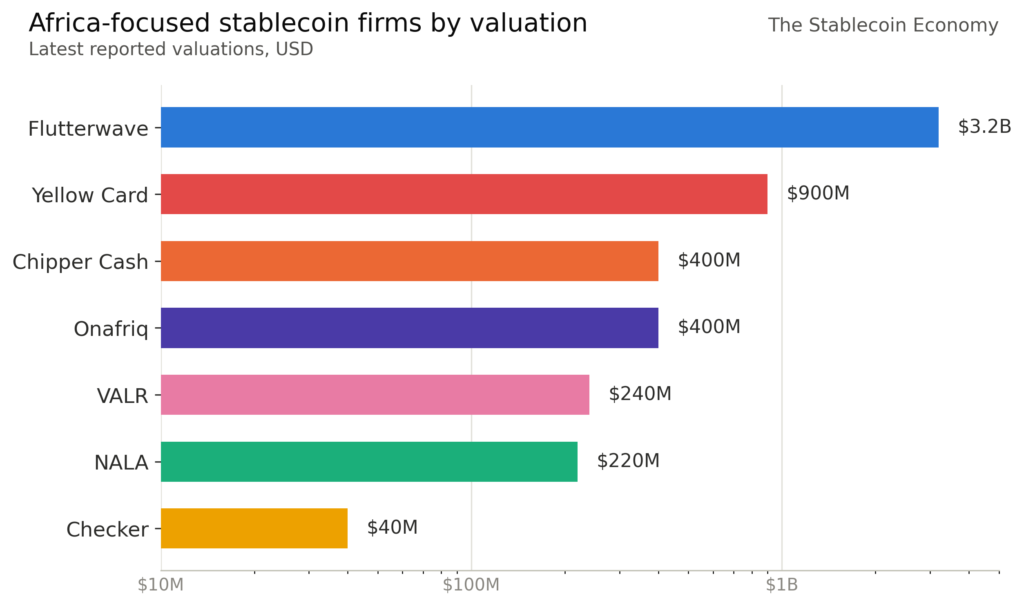
Here are six African focused stablecoin platforms that raised capital in 2026, told from smallest raise to largest.
1. Paycrest opens the year with $404,000
The year’s stablecoin funding story begins quietly in January, when Nigerian project Paycrest raised $404,000 in pre seed funding from Hashed Emergent, StarkWare, Lava VC, Microtraction and Sunny Side Venture Partners.
It was the smallest check on this list, but arguably one of the most foundational ideas.
Rather than building a consumer app or a single payment corridor, Paycrest set out to build decentralized infrastructure that pools together fragmented stablecoin and fiat liquidity so it can be routed into predictable cross border settlement.
Think of it as plumbing for the plumbers, the kind of protocol layer bet that other, better funded fintechs quietly rely on once they scale.
2. Daya brings in $2.4 million to build a stablecoin neobank
By June, Daya had closed an oversubscribed pre seed round of $2.4 million led by Hivemind Capital, with Lattice, Alliance, Globelink and the Aptos Foundation joining in.
The Lagos based company was founded in October 2025 by former Circle and Helicarrier executives, and it positions itself as a stablecoin native neobank for African businesses rather than consumers.
Its platform bundles local payment rails, stablecoin settlement, FX tooling, compliance and reconciliation into one system for companies that need to move money in and out of the continent.
Since raising, Daya has piloted a stablecoin payment corridor between Africa and the UAE on the Aptos blockchain, working with HashKey MENA, a signal of how quickly these companies look past their home markets.
The round came just months after a $350,000 pre seed check from Alliance DAO, and the company says it has been growing more than 40% month over month.
3. Stabyl raises $2.7 million to fix Africa’s hidden FX problem
Also in June, Stabyl emerged from stealth with $2.7 million in pre seed funding led by Konga, through its KongaPay arm. The Nigerian company is solving a less flashy but genuinely painful problem, which is sourcing foreign exchange before a transaction can even settle.

Banks, payment service providers and traders currently negotiate FX deals one relationship at a time. Stabyl instead offers a shared liquidity pool where institutions can place or match orders and then settle in either fiat or stablecoins, currently USDT and USDC, through MPC wallet provider DFNS. Konga isn’t just an investor here.
It’s also Stabyl’s first real world implementation partner, using KongaPay as the naira settlement rail. The founders are explicit that stablecoins alone don’t solve Africa’s FX problem. The value is in connecting crypto rails to the fiat banking system businesses still depend on.
4. Kulipa pulls in $6.2 million to power stablecoin cards
In April, Paris based Kulipa closed a $6.2 million seed round co led by Flourish Ventures and 1kx, with White Star Capital and Fabric Ventures also participating. Kulipa is the one platform on this list that isn’t headquartered on the continent, but its business is deeply entangled with it.
The company builds stablecoin native card issuing infrastructure, letting fintechs, digital banks and crypto wallets issue Visa or Mastercard branded cards funded directly from stablecoin balances, without the collateral heavy prefunding that usually makes this hard. Its highest profile partner is Flutterwave, whose CEO has publicly framed the tie up as a way to extend stablecoin functionality into everyday, compliant spending.
Since launching in February 2025, Kulipa has issued more than 120,000 cards and reports 70% month over month growth in transaction volume, with Nigeria standing out as a key regulated market in its African expansion plans.
5. Checker secures $8 million with backing from Morocco’s sovereign fund
May brought a bigger number. Checker raised $8 million in seed funding, co led by Al Mada Ventures, the investment arm of Morocco’s sovereign wealth fund, alongside Galaxy Ventures and Framework Ventures.
DFS Lab, Bitso, Airtm, Onigiri Capital, SNZ Capital and Velocity Capital joined in too, along with operator investors including Flutterwave co founder Iyin Aboyeji. Checker connects banks, remittance firms and neobanks to stablecoin liquidity and payment rails through a single API, covering 75 currencies.
It’s already live in Nigeria, Kenya, Tanzania and Francophone West Africa, and reports $3 billion in total processing volume since launch, about 1% of annual global B2B stablecoin payments by its own estimate. The round stood out for its depth of African backing, from a Moroccan sovereign fund vehicle to well known local operators.
The new capital is earmarked for expanding payment coverage, building embedded borrowing and lending for just in time settlement, and rolling out AI agents for treasury management and back office automation.
6. Yellow Card tops the list with $40 million
By August, Yellow Card had closed the largest round on this list by a wide margin. The Africa founded stablecoin infrastructure company secured $40 million in strategic equity financing from SC Ventures, Standard Chartered’s venture arm, alongside Sony Innovation Fund, Polychain Capital, Blockchain Capital and other strategic backers.
Yellow Card has processed more than $10 billion in cumulative transactions and holds licenses across 22 jurisdictions.
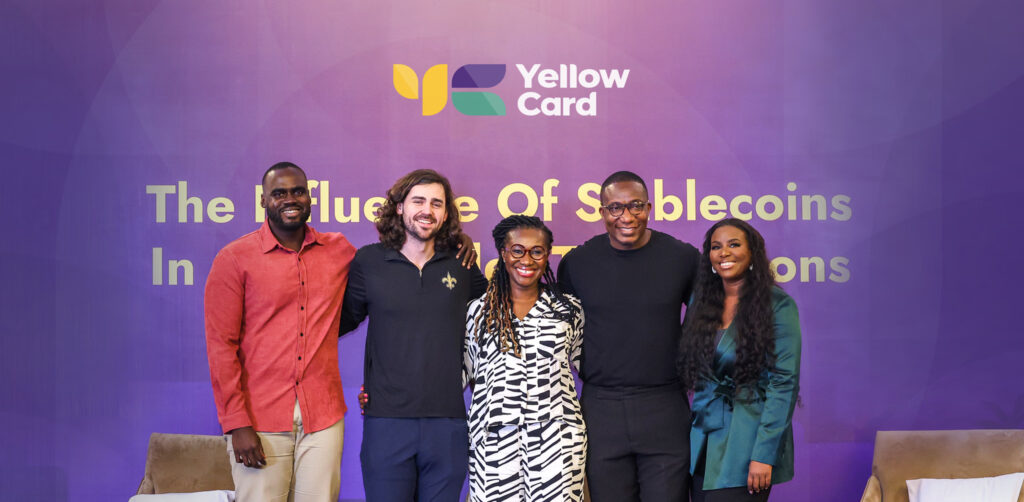
This latest round pushes its total equity funding above $120 million, and the money is earmarked for growing its Global USD Accounts platform, which lets businesses hold dollar balances, convert between stablecoins, manage treasury and move funds through domestic payment networks in more than 50 countries.
Notably, the fresh capital is also explicitly targeted at expansion into Latin America and Asia Pacific, a reminder that even the continent’s flagship stablecoin company is now looking well beyond Africa for its next stage of growth, partly as a hedge against a patchwork of tightening local regulation.
Final thought
Line these six deals up and a pattern emerges. The earlier and smaller the check, the more purely African the company’s ambitions still are.
Paycrest and Stabyl are building infrastructure squarely for Nigeria’s and the region’s own fragmented liquidity problems. By the time you get to Kulipa, Checker and Yellow Card, the larger, more mature rounds, the story shifts. These are companies that built their credibility solving African problems and are now using that credibility, and fresh global capital, to expand into Latin America, Asia and the Gulf.
That’s not necessarily a bad thing. Revenue generating infrastructure companies diversifying their geographic risk is a far more mature posture than the token speculation that defined Africa’s last crypto cycle. But it does raise a real question for the continent.
As regulators in Kenya, Nigeria, Ghana, South Africa and Ethiopia tighten the rules around stablecoins in 2026, will the companies that made their names here keep building for Africa first, or will Africa become just one market among several for a generation of founders who now have the funding, and the passports, to go anywhere?
The next round of fundraises, and where the money says it’s going, will be the real answer.